Description
SPECIFICATIONS
Audio Crossover: Two-Way
Audio Output: Dual
Battery: No
Brand Name: Sounderlink
Built-in Microphone: No
Cabinet Material: Metal
Category: Speakers
Channels: 1
Communication: AUX,Wired
Display Screen: No,No
Feature: None
High-concerned chemical: None
Impedance: 4 Ohm
Inbox adaptor: No
Input Power(W): 25-49 W
Input/Output: AUX
Intelligent Personal Assistant: NONE,None
Interface Type: None
Material: Metal
Number of Loudspeaker Enclosure: 1
Origin: Mainland China
Output Voltage: 30W
PMPO: 60 W
Playback Function: None
Power Source: Ac,DC,DC,Ac
Remote Control: No
Sound Mode: Hi-Res Sound Mode,3D Surround Sound Mode,Immersive Sound Mode,Stereo Sound Mode,Smart Sound Mode,Live Sound Mode,Extra Bass Mode,Transparency Mode,Sleeping Mode,Standard Mode,Game Mode,3EQ Modes,Other
Speaker Classification: Full-range Speaker
Speaker Type: Bookshelf,Mini
Special Feature: Mini
Support APP: No
Support Apt-x: Yes
Support Memory Card: No
Tweeter material: Metal
Tweeter type: Ribbon
Use: Home
Voice Control: No
Voltage range: USB (5-20V DC)
Waterproof: No
Wireless Type: None
FEATURES
• sounds fantastic with wide dispersion
• Low- mass pleated Kapton diaphragm
• Very fast transition, high power handling with strong Neodymium
• High detailed and dynamic output, very low distortion
• Rich Mid-range
• Deliver clean, airy, transparent sound,inherently natural and musically pleasing
PARAMETER |
Impedance |
8ohms,or 4Ohm, |
Power Handling |
30watts(RMS),60watts( max) |
Sensitivity |
90dB@1W/1m |
Frequency Response |
200 - 20,000Hz |
Diaphragm |
Kapton&Alumium foil |
Magnet System |
Neodymium |
Dimensions |
Overall Outside Diameter7.86" x 3.50"
Depth: 0.44" |
Net. Weight |
410gram |
Recommend Crossover Frequency |
350Hz
|
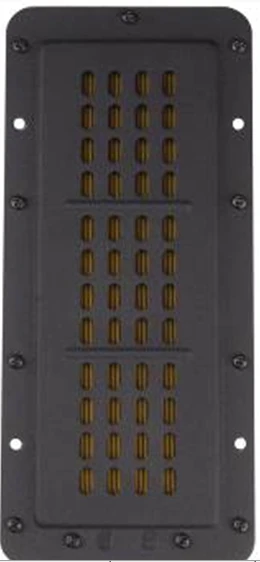
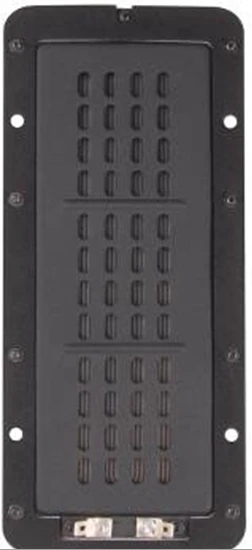
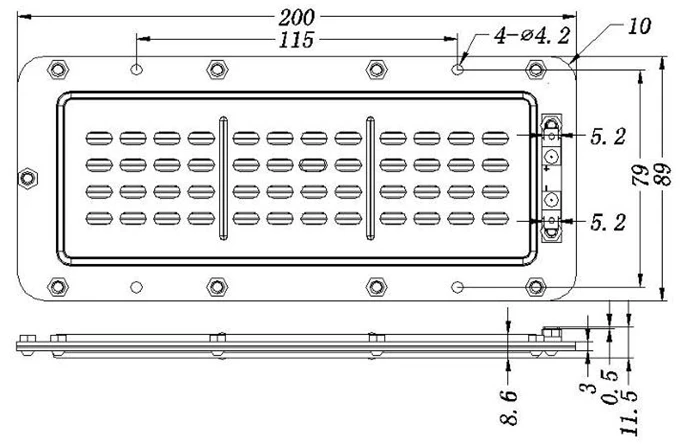
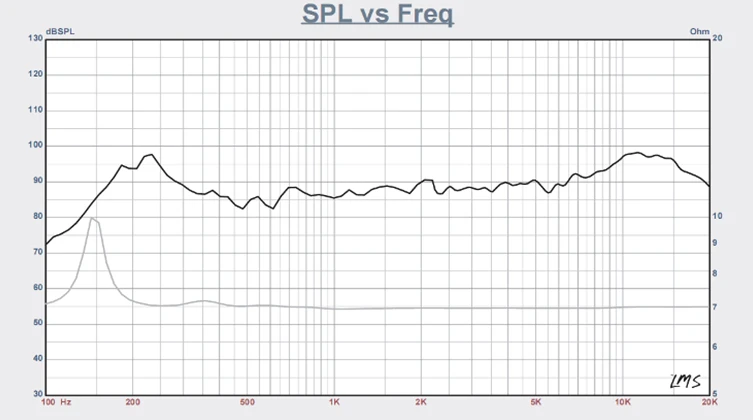


The comparison of B&G NEO8 and AMT-920 form wonderful electronics Store.

A ribbon tweeter uses a very thin diaphragm (often of aluminum, or perhaps metalized plastic film) that supports a planar coil frequently made by deposition of aluminium vapor, suspended in a powerful magnetic field (typically provided by neodymium magnets) to reproduce high frequencies. The development of ribbon tweeters has more or less followed the development of ribbon microphones. The ribbon is of very lightweight material and so capable of very high acceleration and extended high frequency response. Ribbons have traditionally been incapable of high output (large magnet gaps leading to poor magnetic coupling is the main reason). But higher power versions of ribbon tweeters are becoming common in large-scale sound reinforcement line array systems, which can serve audiences of thousands. They are attractive in these applications since nearly all ribbon tweeters inherently exhibit useful directional properties, with very wide horizontal dispersion (coverage) and very tight vertical dispersion. These drivers can easily be stacked vertically, building a high frequency line array that produces high sound pressure levels much farther away from the speaker locations than do conventional tweeters.
Planar-magnetic tweeter
Some loudspeaker designers use a planar-magnetic tweeter, sometimes called a quasi-ribbon. Planar magnetic tweeters are generally less expensive than true ribbon tweeters, but are not precisely equivalent as a metal foil ribbon is lighter than the diaphragm in a planar magnetic tweeter and the magnetic structures are different. Usually a thin piece of PET film or plastic with a voice coil wire running numerous times vertically on the material is used. The magnet structure is less expensive than for ribbon tweeters.


